Skip to Content

Straight Electric Heaters – Reliable Heating Solutions, ATEX Included

Straight heating elements are engineered for efficient and reliable heating of liquids, gases, and solid materials, covering a wide range of industrial applications. Designed to meet diverse process requirements, they can be customized in terms of dimensions, power, materials, and certifications, including ATEX for hazardous environments.

Request a quote!
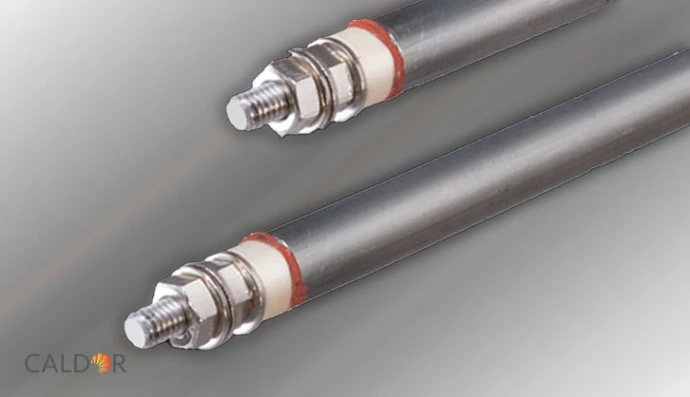
Straight (Tubular) Heating Elements for Industrial Applications

Straight tubular heating elements are designed to provide efficient and reliable heating for liquids, gases, and solid materials across a wide range of industrial processes. Manufactured with compacted MgO insulation and high-quality metallic sheaths, these heaters ensure uniform heat transfer, mechanical robustness, and long service life, even in demanding operating conditions.

Available in standard or fully customized configurations, Caldor straight heating elements can be supplied with different diameters, lengths, power ratings, voltages, mounting options, and sheath materials. ATEX-certified versions are also available for use in hazardous environments, making them suitable for chemical, petrochemical, pharmaceutical, food processing, packaging, and general industrial applications.

Key Features

  • Wide Application Range : Designed for efficient heating of liquids, gases, and solid materials across diverse industrial processes.
  • High-Quality Sheath Materials : Available in stainless steels (AISI 304L, 316L, 321), Incoloy® alloys, titanium, copper, and carbon steel to match corrosive, high-temperature, or hygienic environments.
  • Optimized Surface Load Design : Engineered with application-specific watt densities to ensure safe operation, long service life, and reliable heat transfer.
  • Advanced MgO Insulation : Compacted, high-purity magnesium oxide insulation provides excellent dielectric strength and efficient thermal conductivity.
  • Customizable Dimensions & Power : Manufactured in a wide range of diameters and lengths, with tailored voltage, wattage, and power distribution.
  • Flexible Mounting & Integration Options : Suitable for immersion, air heating, cast-in, or surface-mounted applications, with various fixing and terminal configurations. 
  • Robust Sealing Solutions : Multiple sealing options available, including epoxy, silicone, hermetic, and ceramic sealing for harsh environments.
  • ATEX Solutions Available : ATEX-compliant designs can be supplied for hazardous areas, depending on application requirements and zone classification.
  • Strict Quality Control & EU Compliance : Manufactured in accordance with EU Directives 2014/35/EU (Low Voltage) and 2014/30/EU (EMC), with comprehensive electrical and mechanical testing. 
  • Engineered & Manufactured in Europe : Designed and produced in Romania, ensuring consistent quality, short lead times, and responsive engineering support.
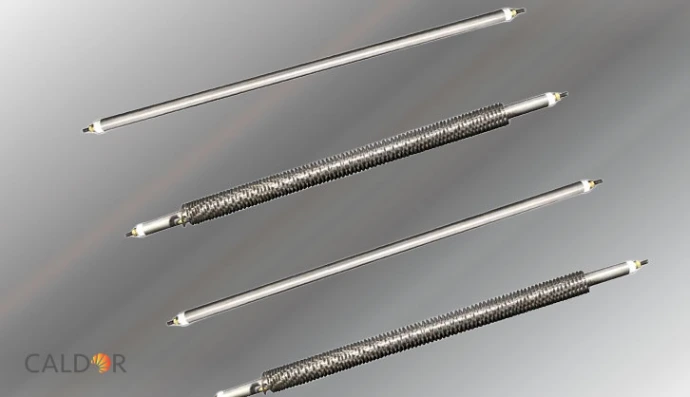
Tubular (Straight) Heating Elements – Technical FAQ

Media & Typical Applications

Caldor tubular (straight) heating elements are engineered for heating liquids, gases, and solid materials across industrial processes such as tanks and vessels, pipelines, air heating, tooling, process equipment, and custom machinery.

Water – Recommended Surface Load & Sheath Materials
  • Stagnant water: 8–12 W/cm² – Copper, AISI 321, AISI 316L
  • Circulating water: 10–16 W/cm² – Copper, 316L, Incoloy 800, Incoloy 825
  • Boric water: up to 8 W/cm² – 316L
  • Boiler water: 8–16 W/cm² – 316L, Incoloy 800, Incoloy 825
  • Chlorinated water: up to 6 W/cm² – Incoloy 825
  • Sea water: 3.5–6 W/cm² – Incoloy 825, Inconel 600
  • Demineralized / deionized / distilled / softened: 4–6 W/cm² – 316L, Incoloy 800, Incoloy 825
  • Domestic hot water: 4–8 W/cm² – Copper, 316L, Incoloy 825
  • Caustic water (2%–70%): 2.3–7 W/cm² – 316L, Incoloy 825, Inconel 600
Oil – Recommended Surface Load & Sheath Materials
  • Fuel oil pre-heating (light / C fuel oil): 1–2 W/cm² – AISI 321, AISI 316L
  • Heavy fuel oil: 0.5–3.5 W/cm² (according to grade) – AISI 316L
  • Gasoline / kerosene: 3–3.5 W/cm² – AISI 316L
  • Machine oil (SAE 10/30/40/50): 2–3.5 W/cm² – AISI 316L
  • Mineral oil: 0.5–3.5 W/cm² (according to temperature) – AISI 321, AISI 316L
  • Lube oil: ~2.3 W/cm² – AISI 321, AISI 316L
Acids & Corrosive Fluids – Materials & Load Guidance
  • Acetic acid: up to 6 W/cm² – AISI 316L, Incoloy 825
  • Boric acid: up to 6 W/cm² – Incoloy 825
  • Chloric / hydrofluoric / nitric / sulphuric acids: ≤1.5 W/cm² – PTFE coating
  • Alkaline bath: up to 6 W/cm² – AISI 321 (no corrosive compounds), AISI 316L
  • Phosphate bath: up to 4 W/cm² – AISI 316L, Incoloy 825
Glycol & Other Liquids
  • Ethylene / propylene glycol: 4–8 W/cm² (according to concentration) – AISI 321, AISI 316L
  • Asphalt / tar / highly viscous media: 0.5–1.5 W/cm² – AISI 316L
  • Milk: ~0.3 W/cm² – AISI 316L
Gas Heating – Load Guidance & Materials
  • Air: 0.1–8 W/cm² (according to sheath temperature) – AISI 321
  • Circulating air: 0.1–8 W/cm² (according to sheath temperature) – AISI 309
  • Natural gas: 0.1–8 W/cm² (according to sheath temperature) – AISI 321, AISI 316L
  • Argon / nitrogen: load according to sheath temperature – AISI 321, 316L, Incoloy 825, Inconel 600
  • Propane / butane: load according to sheath temperature – AISI 321, AISI 316L
  • Oxygen / hydrogen: load according to sheath temperature – AISI 316L
Solids / Cast-In or Embedded Heating
  • Aluminium / brass / bronze cast-in: 4–15 W/cm² – AISI 309
  • Copper-nickel cast-in: 5–10 W/cm² – AISI 309
  • Oxychlorination: ~3 W/cm² – Incoloy 800, Incoloy 825
  • Calcination: ~3 W/cm² – Incoloy 800, Incoloy 825
  • Hydrocarbon regeneration: ~2 W/cm² – Incoloy 800, Incoloy 825
Sheath Materials – Selection Overview

The sheath material must be selected according to the working medium, corrosion risk, and admissible temperatures.

  • AISI 304L: good weldability and corrosion resistance at room temperature
  • AISI 321: titanium-stabilized; recommended for long-term use up to ~800°C
  • AISI 316L / 316Ti: improved pitting and stress corrosion resistance
  • AISI 329 (duplex): high mechanical strength and strong corrosion resistance
  • Incoloy® 800: high-temperature oxidation resistance (up to ~1100°C)
  • Incoloy® 825: excellent resistance to reducing/oxidizing acids
  • Incoloy® 900: enhanced creep and oxidation resistance (up to ~1150°C)
  • Copper: low-temperature water heating applications
  • Titanium: aggressive chemical environments, high corrosion resistance
Construction – Key Components

A tubular heating element is built as an integrated assembly. Typical components include:

  • Sheath (tube): the protective outer mantle
  • Resistive coil: NiCr or FeCrAl (Kanthal) depending on temperature class
  • Granular insulation: electro-fused MgO (standard) / high-purity or compacted variants (options)
  • Internal terminal: nickel-plated steel / stainless steel / copper for low temperature
  • Sealing system: epoxy, silicone, hermetic, or ceramic depending on temperature & environment
  • Connecting terminal: threaded studs, fast-on tabs, ceramic head, or custom solutions
  • Cold zones: short/medium/long non-heated sections if required
Sealing Options
  • Hermetic sealing: standard / additional / high-temperature variants
  • Porous sealing: standard / high-temperature variants
  • Epoxy resin: cost-effective standard use
  • Silicone resin: flexible and moisture-resistant
  • Ceramic sealing: stability at temperatures > 1000°C
Electrical & Mechanical Features (Typical QC)
  • Power tolerance: +5% / −10%
  • Class I dielectric strength: 1250 V – 1 min
  • Class I leakage current: 0.75 mA/kW (max 5 mA)
  • Class II dielectric strength: up to 3750 V – 1 min (depending on insulation type)
  • Class II leakage current: max 0.25 mA
  • Dimensions: controlled according to general IT15 tolerances

For custom-made products, control parameters are defined during the design phase according to the application. Adequate heat dissipation must be ensured to prevent exceeding admissible sheath and sealing temperatures.

EU Compliance (CE) – Directives & Standards

Caldor products are designed and manufactured in Romania in accordance with EU requirements, including: Low Voltage Directive 2014/35/EU and EMC Directive 2014/30/EU.

  • EN 60335 series (safety requirements for electrical appliances and specific applications)
  • EN 60519 (safety in electroheat installations)
  • EN 60529 (IP protection code)

Tubular heating elements are components of a final apparatus; the final equipment manufacturer must ensure full system compliance, grounding, and protective measures according to applicable standards.

ATEX Section – Hazardous Area Solutions

What ATEX solutions does Caldor provide for tubular heaters?

Caldor can supply tubular (straight) heating elements and heater assemblies for use in hazardous environments, including ATEX configurations when required by the installation.

  • Design adapted to hazardous area requirements (surface temperature control, materials, sealing)
  • Selection of sheath materials suited for aggressive or explosive atmospheres
  • Integration with temperature limitation and control strategies (as required by the project)
  • Documentation prepared according to the specified ATEX scope of supply

ATEX applicability depends on the complete heater system and installation conditions. Please provide zone classification, medium, operating temperatures, and control concept when requesting a quote.

What information is required for an ATEX quotation?
  • Hazardous area classification (Zone 0/1/2 or 20/21/22) and gas/dust group
  • Required temperature class / max permissible surface temperature
  • Medium to be heated and operating parameters (temperature, flow, pressure)
  • Installation details (vessel/pipeline, immersion depth, mounting)
  • Electrical requirements (voltage, power, control method)
  • Required certification scope and documentation
Request a Quote

Share your medium, temperature, dimensions, power requirements, and installation details. For hazardous areas, include ATEX zone classification and surface temperature limits.

Contact our engineering team to request a quotation and submit your technical specifications.

Tube Protection & Sealing – Caldor Heat (2025)
Max. Tube Temperature Tube Material Sealing Type Min. Temperature Max. Normal Operating Temperature Max. Peak Temperature
175 °CCopperE-40 °C150 °C170 °C
270 °CAISI 304L / 321 + PTFE Tube (Teflon®)E-40 °C150 °C170 °C
300 °CAISI 304L / 321E-40 °C150 °C170 °C
300 °CAISI 316LE-40 °C150 °C170 °C
320 °CAISI 316T (new 2025)E-40 °C160 °C180 °C
350 °CAISI 329 (new 2025)E-40 °C170 °C190 °C
440 °CTitaniumE-40 °C150 °C170 °C
500 °CCarbon SteelE-40 °C150 °C170 °C
600 °CAISI 304L / 321S-40 °C150 °C170 °C
600 °CAISI 316LS-40 °C150 °C170 °C
600 °CIncoloy® 800 / 825S-40 °C150 °C170 °C
650 °CIncoloy® 900 (new)S-40 °C180 °C200 °C
700 °CAISI 304L / 321T-40 °C200 °C250 °C
750 °CAISI 304L / 321T-40 °C200 °C250 °C
800 °CAISI 316T (new 2025)T-40 °C220 °C270 °C
850 °CIncoloy® 800T-40 °C200 °C250 °C
850 °CAISI 304L / 321C-40 °C750 °C750 °C
850 °CIncoloy® 800C-40 °C850 °C850 °C
950 °CIncoloy® 900 (new)C-40 °C900 °C950 °C
1000 °CAISI 329 (new 2025)C-40 °C950 °C1000 °C

Sealing type legend: E = hermetic sealing; S = additional hermetic sealing; T = porous; C = porous (ceramic class).


Standardized Options for Tube Diameter (Round) – Caldor Heat
Tube Material Ø6.4 Ø8 Ø8.5 Ø10 Ø12 Ø12.5 Ø16
AISI 3213900680068006900620069006200
AISI 304L3900680068006900620069006200
AISI 3043800680062006900620069006200
AISI 316L3800680068006900620069006200
Incoloy® 8003800700069006900620069006200
Incoloy® 8256200680062006900620069006200
AISI 309S3500680062006900620069006200
Steel3500700071007100620069006400
Copper3900710071005900620069006400
Titanium6200690069006850620069006900

Note: For square-section tubes, please contact us.


Straight (Tubular) Electric Heating Elements 
Caldor specializes in the design and manufacturing of high-performance straight (tubular) heating elements, engineered to deliver reliable, efficient, and uniform heat transfer across a wide range of industrial applications. Designed for heating liquids, gases, and solid materials, our tubular heaters are widely used in tanks, vessels, pipelines, air heating systems, process equipment, and custom industrial machinery where durability and thermal stability are essential.

Caldor tubular heating elements are distinguished by their robust MgO-compacted construction, high-quality metallic sheaths, and optimized surface load design, ensuring consistent heat distribution and long service life. Capable of operating under demanding thermal and mechanical conditions, these heating elements provide stable performance even in corrosive, high-temperature, or continuous-duty environments.

Each straight tubular heater is custom-engineered to meet specific process requirements. Available options include a wide range of diameters and lengths, customized wattage and voltage configurations, tailored power distribution, multiple sheath material selections, and various sealing and terminal solutions. ATEX-compliant designs can also be supplied for hazardous area applications, depending on project specifications.

At Caldor, we combine deep engineering expertise with responsive technical support. Our engineering team works closely with customers throughout the design and specification process, ensuring seamless integration into existing systems while maximizing efficiency, safety, and operational reliability. From initial consultation to long-term support, we are committed to delivering dependable heating solutions that add measurable value to your industrial processes.

We appreciate your interest in Caldor straight (tubular) heating technology and look forward to supporting your projects with reliable, precision-engineered solutions.

Technical & Commercial Inquiries for Custom-Engineered Tubular Heating Elements

Contact our engineering team to request detailed quotations and submit technical specifications for custom-designed tubular heating elements. We provide expert engineering support and full design flexibility to meet the thermal, mechanical, and environmental requirements of liquid, gas, and solid heating applications.