Skip to Content

Finned Tubular Heaters – Industrial Air & Gas Heating Solution

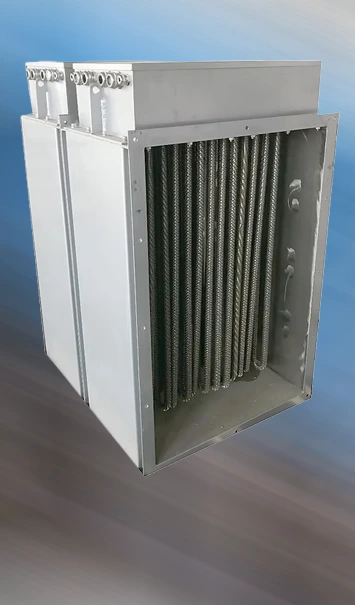
Finned tubular heaters are electric heating elements specifically engineered for efficient heating of air and non-corrosive gases in industrial systems. By integrating spiral-wound fins onto a robust tubular heating element, these heaters significantly increase the convective surface area, enabling higher heat transfer efficiency, lower sheath temperatures, and extended service life compared to conventional open-coil heaters. Designed for safety, durability, and consistent performance, finned tubular heaters are a reliable solution for demanding industrial air-heating applications.
Request a quote!

Finned Tubular Heaters

Industrial Electric Heating Elements

Finned tubular heaters are electric heating elements specifically designed for efficient heating of air and non-corrosive gases in industrial and commercial applications. By integrating precision-wound fins onto a tubular heating element, the effective heat transfer surface is significantly increased, allowing higher power output, improved thermal efficiency, and lower sheath temperatures compared to standard tubular or open-coil heaters.

Caldor’s finned tubular heaters are engineered for continuous operation in demanding environments where reliability, safety, and long service life are essential. The finned construction ensures uniform heat dissipation, reduces thermal stress on the sheath, and minimizes maintenance requirements, making these heaters a robust and cost-effective solution for air heating systems.

Designed as a safer alternative to open coil heaters, finned tubular heaters reduce the risk of fire caused by dust or combustible particles and limit exposure to live electrical components. Their rugged mechanical design allows stable operation in high airflow, vibration-prone, and industrial installations.

Caldor offers custom-manufactured finned tubular heaters, tailored to project-specific requirements such as power rating, dimensions, fin material, sheath alloy, mounting method, and electrical connection. This flexibility ensures optimal performance across a wide range of applications, including industrial ovens, drying systems, load banks, HVAC equipment, wind turbines, marine installations, and large commercial heating systems.

By combining efficient heat transfer, durable construction, and application-specific material selection, Caldor’s finned tubular heaters deliver reliable performance and long-term operational stability in modern industrial heating systems.

Key Features

  • Enhanced Heat Transfer Efficiency : Precision-wound fins significantly increase the convective surface area, ensuring efficient heat dissipation for air and non-corrosive gas heating.
  • Lower Sheath Temperature : Optimized fin geometry reduces sheath operating temperature, extending heater lifespan and improving overall safety. 
  • Robust Tubular Construction : Built on heavy-duty tubular heating elements designed for continuous operation in industrial environments.
  • Safe Alternative to Open-Coil Heaters : Minimizes fire risk from dust or airborne particles and reduces exposure to live electrical components.
  • Customizable Design : Power rating, watt density, dimensions, fin material, sheath alloy, and mounting options can be tailored to application requirements.
  • Wide Range of Applications : Suitable for industrial ovens, drying systems, load banks, HVAC units, wind turbines, marine installations, and commercial heating systems.
  • Resistance to Harsh Conditions : Designed to perform reliably in high airflow, vibration-prone, and demanding industrial installations.
  • Multiple Sheath & Fin Material Options : Available in carbon steel, stainless steel, and high-temperature alloys to match environmental and corrosion conditions.
  • Easy Installation & Maintenance : Compatible with various mounting accessories such as bulkhead fittings, brackets, collars, and locator washers.
  • Long Service Life & Low Maintenance : Durable construction and efficient thermal management reduce downtime and maintenance costs over the heater’s operating life.
Product Overview

  • Power range from 100 W up to 15 kW per heater (higher outputs achievable through multiple heater configurations or assemblies)
  • Designed for atmospheric or low-pressure air and gas heating applications Ideal for forced convection systems and open or ducted airflow environments
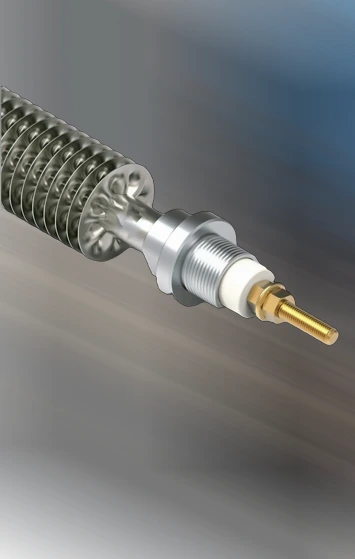
  • Tubular heating elements with precision-wound fins Fins significantly increase the heat transfer surface, optimizing convective heating efficiency
  • Sheath materials available Stainless steel (AISI 304 / 316 / 321), Incoloy®, or other alloys depending on operating temperature and environment 
  • Fin materials Carbon steel or stainless steel, securely bonded to the sheath for improved thermal conductivity
  • Single-phase or three-phase electrical configurations
  • Custom voltage, watt density, fin geometry, and connection options available
Advantages

  • High thermal efficiency for air and gas heating Enlarged surface area enables higher power output with lower sheath temperatures
  • Safer alternative to open-coil heaters Reduced fire risk from dust or airborne particles and minimized electrical exposure
  • Long service life Lower operating temperatures and robust mechanical construction reduce thermal stress and material fatigue
  • Flexible design options Heater dimensions, power density, fin spacing, materials, and mounting accessories can be adapted to the application
  • Cost-effective solution High efficiency and low maintenance requirements result in reduced operating costs over time
  • In-house engineering and manufacturing control Ensures consistent quality, traceability, and repeatable performance across production batches
Operating Conditions & Configurations

  • Standard industrial execution for non-hazardous environments
  • Ambient operating temperatures From –40 °C up to +80 °C (higher ambient temperatures possible with adapted designs)
  • Process temperature capability Suitable for air and gas heating applications up to 750–800 °C, depending on sheath and fin material
  • Designed for dry air and non-corrosive gas heating Not intended for direct immersion in liquids
  • Installation environments Industrial plants, commercial facilities, outdoor systems, and enclosed equipment housings 
  • Resistant to vibration and high airflow conditions Suitable for forced-air systems, blowers, and ventilation ducts
  • Mounting orientations Horizontal or vertical installation supported, depending on airflow direction and system design
  • Optional accessories

    • Bulkhead fittings, mounting brackets, collars, and locator washers

    • Protective surface treatments or coatings for humid or mildly corrosive environments


Media Compatibility

Finned tubular heaters are designed for dry heating of air and gases by convection. Media selection depends on gas composition, humidity, contaminants, and required outlet temperature. For any chemically aggressive or safety-critical media, Caldor recommends validation of materials, watt density, and installation method.

Recommended media (primary use)

Air heating

  • Dry air (forced convection in ducts or enclosures)
  • Circulating air systems (recirculation ovens, dryers, HVAC)
  • Make-up air / ventilation heating

Non-corrosive gases

  • Nitrogen (N2)
  • Argon (Ar)
  • Carbon dioxide (CO2) case-by-case
  • Clean inert process gases with low moisture and low contaminants

Typical configurations are optimized for high airflow, stable outlet temperature, and reduced sheath temperature. Final selection depends on airflow velocity, duct geometry, and maximum allowable sheath temperature.

Conditionally compatible media (requires engineering validation)

The following media may be compatible if composition, dew point, and contaminants are controlled, and if suitable sheath/fin materials and watt density are selected:

  • Humid air or high-condensation environments coatings / stainless fins recommended
  • Air with mild chemical vapors (low concentration) material selection critical
  • Process exhaust streams with controlled particulate level filtration advised
  • Warm-up air for equipment containing oils or plastic fumes verify deposits

In these cases, Caldor typically reviews: dew point vs. sheath temperature, deposit risk, oxidation conditions, and maintenance interval requirements.

Not recommended media
  • Direct immersion in liquids (water, oil, chemicals) use immersion heaters instead
  • Corrosive gases with aggressive halogens or acids (e.g., HCl, HF, chlorine-rich atmospheres)
  • Sticky aerosols, heavy dust loads, or media that cause rapid fouling on fins
  • Explosive atmospheres (hazardous areas) without dedicated certified design

For high-contamination airflow, fouling can act as an insulating layer, increasing sheath temperature and reducing service life. Where dust is unavoidable, filtration and periodic cleaning should be defined in the maintenance plan.

Material guidance (typical selection)

Standard industrial environments

  • Sheath: AISI 304 / 321
  • Fins: carbon steel
  • Best for clean or lightly humid air

Humid / outdoor / mildly corrosive environments

  • Sheath: AISI 316 / 316L
  • Fins: stainless steel
  • Optional protective coatings for added corrosion resistance

Higher temperature duty

  • Sheath: high-temperature stainless or Incoloy® (application-dependent)
  • Fins: stainless steel
  • Designed to reduce oxidation and thermal fatigue

Inert gases (clean systems)

  • Sheath: AISI 316L / Incoloy® (as required)
  • Fins: stainless steel
  • Validated by temperature, flow, and purity requirements

Material selection is always tied to sheath temperature limit, corrosion exposure, and the expected maintenance cycle. Provide gas composition, inlet temperature, airflow (Nm³/h), and target outlet temperature for correct engineering.

Installation notes affecting media compatibility
  • Airflow is mandatory: finned heaters must be operated with adequate flow to avoid overheating.
  • Keep fins clean: fouling reduces heat transfer and increases sheath temperature.
  • Sensor placement matters: process control (air temp) and safety control (sheath temp) may both be required.
  • Correct mounting: align heater and airflow direction to prevent hot spots and ensure uniform heating.

For accurate sizing, Caldor typically requires: duct dimensions, airflow, inlet/outlet temperatures, altitude, maximum allowable pressure drop, and installation orientation.

Industrial Applications

Caldor’s finned tubular heaters are engineered for efficient and reliable heating of air and non-corrosive gases in industrial and commercial systems where controlled airflow heating is required:

  • Industrial Ovens & Drying Systems

    Uniform air heating for curing, drying, baking, and heat-treatment processes in continuous or batch operations.

  • Process Machinery & Production Lines

    Air heating for temperature stabilization, preheating, and environmental control in heavy-duty industrial equipment.

  • Load Bank & Testing Systems

    Controlled air heating for electrical load banks and testing equipment, ensuring accurate performance simulation and heat dissipation.

  • HVAC & Ventilation Systems

    Air heating for heating, ventilation, and air-handling units in industrial plants, commercial buildings, hospitals, and public facilities.

  • Renewable Energy & Wind Turbine Systems

    Anti-freeze and de-icing air heating applications for nacelles, control cabinets, and critical components exposed to low temperatures.

  • Marine & Port Infrastructure

    Air heating solutions for ships, decks, containers, and port facilities, designed to operate reliably in humid and demanding environments.

  • Food, Packaging & Plastics Industries

    Hot air generation for drying, forming, and process air heating where stable temperature control and continuous operation are required.

  • Custom & Engineered Air Heating Systems

    Tailor-made solutions for specialized applications requiring precise airflow heating, specific power densities, and application-adapted materials.


Heating Elements

For finned tubular heaters, Caldor Heat Engineering SRL carefully selects watt density, tube diameter, sheath alloy, and fin configuration to maximize reliability, thermal stability, and long-term performance in air and gas heating applications.

Design philosophy

The heating element configuration is defined by the application itself: the nature of the heated medium (air or gas), airflow regime (natural or forced convection), inlet and target outlet temperatures, maximum allowable sheath temperature, humidity level, and potential corrosion exposure.

This application-driven engineering approach ensures optimized heat transfer, reduced thermal stress, extended service life, and stable electrical performance—even in continuous-duty or variable operating conditions.

Key parameters

Watt density • tube diameter • sheath alloy • fin material & spacing • insulation system • terminal sealing • cold zone design

Outcome

Reduced risk of overheating, corrosion-related failures, and insulation degradation—especially in high-airflow, high-temperature, or cyclic-duty processes.

Heating element technologies
  • Tubular heating elements — the core heat source, optimized for convection heating and continuous industrial operation
  • Precision-wound fin assemblies — increase convective surface area and improve heat dissipation to air or gas streams
Tube diameters (standard)
  • Ø 6.5 mm
  • Ø 8.5 mm
  • Ø 10 mm
  • Ø 13.5 mm
  • Ø 16 mm
Tube / sheath materials

Stainless steels

  • AISI 321 (1.4541)
  • AISI 316L (1.4404)
  • AISI 309 (1.4828)

High-performance alloys

  • Incoloy® 800 (1.4876)
  • Incoloy® 825 (2.4858)
  • Inconel® 600 (2.4816)

Special materials

  • Titanium (for specific corrosive environments – case-by-case validation)

Protective coatings

  • PTFE (Teflon™) coating
  • Halar® coating

Final material selection depends on gas composition, humidity, allowable sheath temperature, and required watt density.

Tube type
  • Sealed tube — Standard
  • Seamless tube — On request
Manufacturing & quality control
  • European-grade components from qualified suppliers (fully traceable supply chain)
  • Manufacturing and assembly in Romania by Caldor Heat Engineering SRL

Why it matters

Consistent materials, controlled processes, and standardized quality checks ensure repeatable performance across production batches.

Customization

Geometry, fin layout, cold zones, electrical terminations, and sealing systems are adapted to mounting constraints, environment, and service strategy.

Internal construction (typical)
  • Connection terminals — engineered for reliable electrical contact and serviceability
  • Tube (sheath) — alloy or coating selected based on temperature and corrosion exposure
  • Insulation (MgO – magnesium oxide) — optimized for heat transfer and electrical insulation
  • Resistance wire (NiCr 80/20) — Joule-effect heating conductor for stable output
  • Cold length / cold zone — limits heat transfer to terminals and improves sealing life
  • Sealing system — silicone, resins, or cement depending on temperature and environment
  • Output insulation (steatite or corundum) — ensures dielectric strength and creepage distances

Construction details may vary depending on operating temperature, enclosure type, and maintenance philosophy.

Terminals & Electrical Connections

Terminal configurations for finned tubular heaters are selected to ensure secure electrical contact, mechanical robustness, and long-term reliability under thermal cycling, vibration, and airflow exposure.

Standard terminal configurations
  • Threaded rod terminals — carbon steel or stainless steel
    • M4 × 0.7 → tube Ø 6.5 mm / Ø 8.5 mm / Ø 10 mm
    • M5 × 0.8 → tube Ø 13.5 mm
    • M6 × 1.0 → tube Ø 16 mm

Threaded terminals are designed to withstand thermal expansion, vibration, and repeated heating cycles typical of air-heating applications.

Optional terminal executions
  • Plain rod terminals
  • Flat terminals
  • Tab-type terminals
  • Factory-fitted connection cables (high-temperature insulation)

Optional terminal types are selected according to electrical load, connection method, enclosure design, ambient temperature, and installation environment.

Mechanical interfaces & mounting compatibility

Typical mounting methods

  • Mounting brackets for duct or frame installation
  • Bulkhead fittings for through-wall mounting
  • Collars and locator washers for axial positioning

Design considerations

  • Thermal expansion allowance
  • Vibration resistance in forced-air systems
  • Correct alignment with airflow direction

Unlike immersion heaters, finned tubular heaters are designed for dry operation and therefore do not require pressure sealing or threaded process plugs.

Electrical Characteristics

Electrical configurations for finned tubular heaters are engineered to match the available site power supply, control philosophy, and operating conditions, ensuring stable performance and long-term reliability in air and gas heating applications.

Voltage options
  • AC voltage (VAC) — standard industrial power supplies
  • DC voltage (VDC) — specific applications and dedicated control systems

Voltage levels are selected according to local electrical standards, power availability, and the required heater power rating.

Phase configuration & cabling

Single-phase

  • 1PH + N
  • Typical for low to medium power finned heaters

Three-phase

  • 3PH (with or without neutral)
  • Recommended for higher power ratings and balanced load distribution

Internal wiring, conductor sizing, and terminal design are defined according to current load, insulation class, ambient temperature, and applicable electrical standards.

Power range
  • From a few watts for precise temperature maintenance
  • Up to several megawatts for large-scale industrial air heating systems (heater assemblies)

The final power configuration is defined based on required heating capacity, allowable watt density, airflow conditions, control strategy, and installation constraints.

Documentation

Caldor Heat Engineering SRL supplies comprehensive technical documentation with its finned tubular heaters to ensure full traceability, regulatory compliance, and safe installation, operation, and maintenance.

Standard documentation (included)
  • Certificate of conformity to the purchase order
  • Heater electrical wiring diagram
  • Installation, operation, and maintenance (IOM) instruction manual
Regulatory & compliance documents
  • Documentation supplied in accordance with applicable directives, standards, and construction codes
  • PED (Pressure Equipment Directive) documentation, when applicable
  • Material certificates 3.1 according to NF EN 10204

The applicability of PED and related documentation depends on the heater configuration and mechanical interfaces defined for the project.

Manufacturing & quality records

Welding qualifications

  • Welder qualification certificates (QS)
  • Welding procedure qualification records (QMOS / WPS)

Quality & traceability

  • Manufacturing records linked to serial numbers
  • Traceable materials and controlled production steps
Documentation scope definition

The scope and level of documentation are defined during the quotation and engineering phase, in accordance with project requirements, applicable regulations, and customer specifications.

Manufacturing Tests

All Caldor finned tubular heaters are subjected to systematic quality controls to ensure electrical safety, mechanical integrity, and dimensional conformity prior to shipment.

Electrical tests
  • Power test (cold resistance measurement)
    Allowed tolerance: –5% / +10% of nominal resistance value
  • Insulation resistance test
    Test voltage: 500 V DC — minimum cold value: > 100 MΩ
  • Dielectric strength test
    Test voltage: (2U + 1000 V) × 1.2 applied for 1 second
  • Stray current & hot dielectric rigidity On request
    Measured on representative samples at operating temperature
  • Final electrical control
    100% of finned tubular heaters tested prior to shipment
Mechanical tests
  • Visual inspection of welds, fin bonding, assemblies, and overall workmanship
  • X-ray examination of welds If required
  • Liquid penetrant testing (PT) for surface defect detection
  • Pressure or leak test (where applicable to mounting or assemblies)
Dimensional verification
  • Verification of critical dimensions affecting installation, airflow clearance, and performance
Other tests & operations
  • Helium leak test On request
  • Degreasing prior to delivery
  • Argon cleaning for specific applications and cleanliness requirements
Third-party inspection
  • Independent third-party inspection and witnessing On request

Test scope, acceptance criteria, and inspection levels are defined during the quotation and engineering phase in accordance with applicable standards and customer specifications.

Technical & Commercial Inquiries for Custom-Engineered Finned Heaters

Contact our engineering team to submit your technical specifications and request detailed quotations for customer-focused, application-specific Finned heater solutions.