Skip to Content

Flange immersion heaters

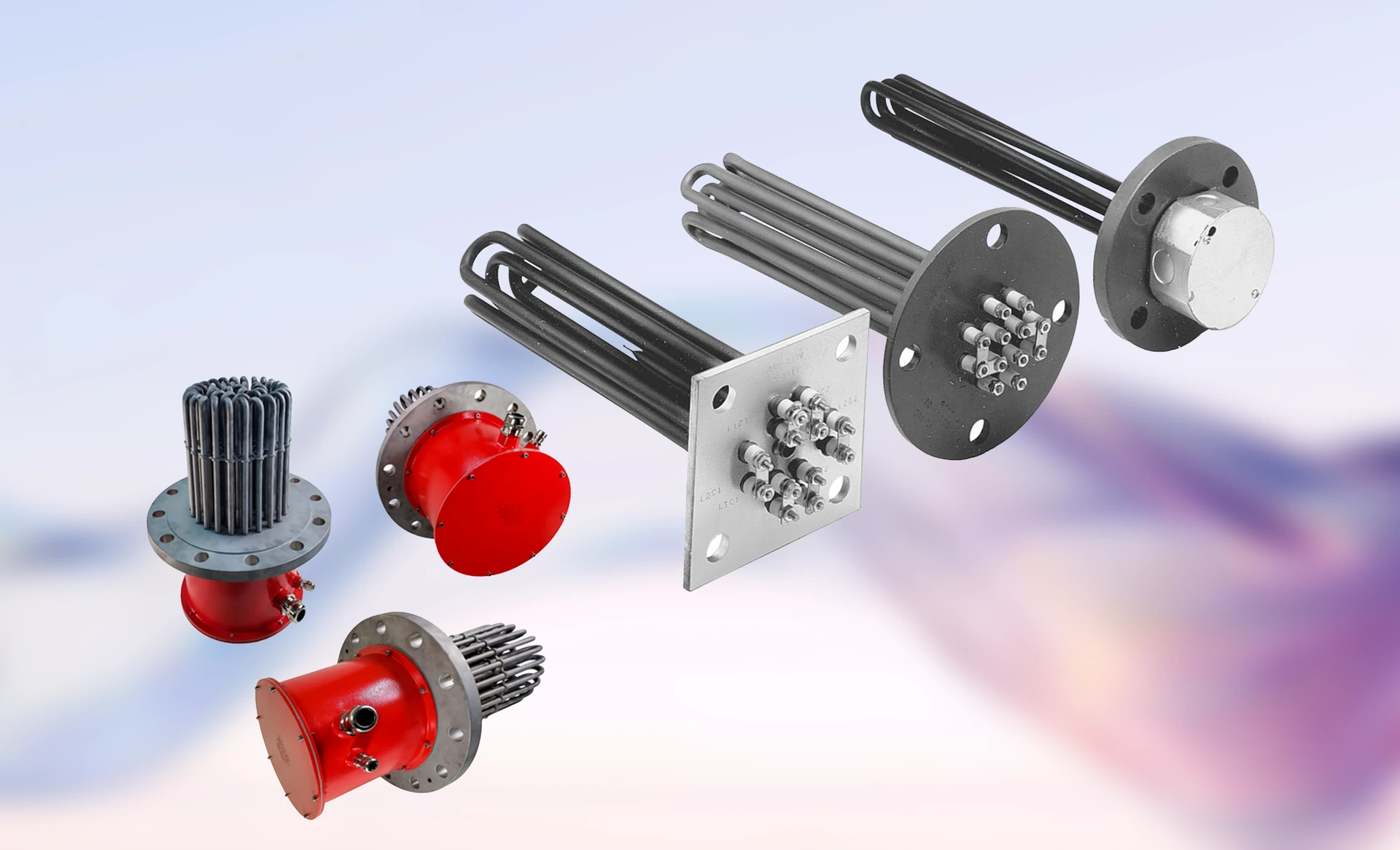
Electrical flange immersion heaters are designed for efficient heating and precise temperature maintenance of liquids, gases, or process mixtures in both static and circulating systems.


Contact our engineering team to select and design heating solutions precisely matched to your system requirements.

Request a quote!
Electrical Flange Immersion Heaters – Caldor Solution 

Electrical flange immersion heaters are engineered by CALDOR HEAT ENGINEERING SRL for efficient heating and precise temperature maintenance of liquids, gases, or process mixtures under both static and circulating operating conditions.

Designed for direct installation into tanks, vessels, and pipelines, Caldor flange immersion heaters ensure uniform heat distribution, high thermal efficiency, and long service life, even in demanding industrial environments. Each unit is custom-manufactured to meet specific process requirements, including power density, operating temperature, medium compatibility, and mechanical constraints.


The design is based on the customer’s process conditions, including the type and properties of the fluid to be heated, inlet and outlet temperatures, operating pressure, heat-exchange conditions (static or flowing), and environmental requirements (ATEX or non-ATEX, onshore or offshore).

Flange immersion heaters are suitable for heating a wide range of fluids, such as water, thermal fluids, oils, heavy fuel, corrosive liquids, gas mixtures, natural gas, and many other process media.

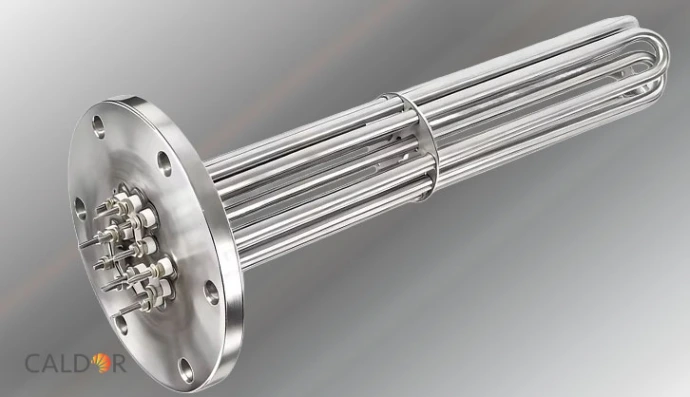
Flange immersion heaters are available in straight or L-shaped configurations.


Key Features

  • Custom-designed based on customer process conditions and operating parameters

  • Suitable for heating liquids, gases, and fluid mixtures

  • Designed for both static and circulating systems

  • Robust flange-mounted construction for secure and reliable installation

  • Available in straight or L-shaped element configurations

  • Wide range of sheath materials for corrosive and high-temperature media

  • Compatible with ATEX and non-ATEX environments

  • Suitable for onshore and offshore applications

  • High thermal efficiency and long service life
Product Overview
  • Heating power up to 5 MW (5,000 kW)
  • Watt density ranging from 0.1 to 20 W/cm², depending on fluid properties and operating conditions
  • Process temperature up to +650 °C
  • Rated voltage up to 690 V
  • Custom mechanical and electrical design based on application requirements
Advantages
  • Wide range of sheath materials, flange types, and construction options, tailored to customer process conditions
  • Over 20 years of experience as a designer and manufacturer of industrial electric heating solutions
  • Equipment available for safe areas and hazardous areas
  • Compliance with ATEX, IECEx, and NEC (NEC 500 / NEC 505) requirements
  • Full in-house control of engineering, manufacturing, testing, and quality assurance
  • Optimized thermal performance, reliability, and service life for demanding industrial applications
Advantages
  • Normal (non-ATEX) environments
  • Hazardous areas:
  • ATEX (EU Directive 2014/34/EU)

  • IECEx

  • NEC Class I / Division 1–2 and NEC 505 (Zone system)

  • Extreme ambient temperatures: from –60 °C to +80 °C
  • Process media temperature range: from –270 °C (3 K) up to +1000 °C, depending on design
  • Suitable for liquids, gases, solids, and mixtures
  • Onshore and offshore installations
  • Resistant to salt atmospheres and aggressive industrial environments
  • Operating pressure up to 250 bar, compliant with PED (Pressure Equipment Directive)

Design & Customization

Flange immersion heaters are designed and manufactured according to customer-specific process requirements. Each solution is engineered based on fluid characteristics, operating temperatures, pressure levels, power density limits, and installation constraints.

Mechanical design parameters—including flange type, element configuration (straight or L-shaped), and material selection—are defined to ensure efficient heat transfer, mechanical strength, and long-term reliability. Electrical design includes voltage, power rating, control integration, and safety components in compliance with applicable standards.

Environmental conditions such as ATEX or non-ATEX classification, onshore or offshore installation, ambient temperature, and corrosion exposure are carefully evaluated to deliver a solution precisely matched to the application.
Media Compatibility & Power Density

Flange Immersion Heaters – CALDOR HEAT ENGINEERING SRL

Water
Application Max Load (W/cm²) Recommended Materials
Stagnant water8 – 12Copper, AISI 321, AISI 316L
Circulating water10 – 16Copper, AISI 316L, Incoloy 800, Incoloy 825
Boric water8AISI 316L
Boiler water8 – 16AISI 316L, Incoloy 800, Incoloy 825
Chlorinated water6Incoloy 825
Sea water3.5 – 6Incoloy 825, Incoloy 600
Demineralized / deionized / distilled / softened water4 – 6AISI 316L, Incoloy 800, Incoloy 825
Domestic hot water4 – 8Copper, AISI 316L, Incoloy 825
Caustic water (2–70%)2.3 – 7AISI 316L, Incoloy 825, Incoloy 600
Oil
Application Max Load (W/cm²) Recommended Materials
Fuel oil pre-heating / light fuel oil / C fuel oil1 – 2AISI 321, AISI 316L
Heavy fuel oil0.5 – 3.5 (grade dependent)AISI 316L
Gasoline / kerosene3.0 – 3.5AISI 316L
Machine oil SAE 10–502.0 – 3.5AISI 316L
Mineral oil0.5 – 3.5 (temperature dependent)AISI 321, AISI 316L
Lubricating oil2.3AISI 321, AISI 316L
Acid & Corrosive Fluids
Application Max Load (W/cm²) Recommended Materials
Acetic acid6AISI 316L, Incoloy 825
Boric acid6Incoloy 825
Chloric / hydrofluoric / nitric / sulphuric acids1.5PTFE (Teflon) coated
Alkaline bath6AISI 321 (non-corrosive), AISI 316L
Phosphate bath4AISI 316L, Incoloy 825
Glycol
Application Max Load (W/cm²) Recommended Materials
Ethylene glycol / Propylene glycol4 – 8 (concentration dependent)AISI 321, AISI 316L
Other Liquids
Application Max Load (W/cm²) Recommended Materials
Asphalt / tar / high-viscosity compounds0.5 – 1.5AISI 316L
Milk0.3AISI 316L
Gas
Application Max Load (W/cm²) Recommended Materials
Air0.1 – 8 (sheath temperature dependent)AISI 321
Circulating air0.1 – 8 (sheath temperature dependent)AISI 309
Natural gas0.1 – 8 (sheath temperature dependent)AISI 321, AISI 316L
Argon / NitrogenAccording to sheath temperatureAISI 321, AISI 316L, Incoloy 825, Incoloy 600
Propane / ButaneAccording to sheath temperatureAISI 321, AISI 316L
Oxygen / HydrogenAccording to sheath temperatureAISI 316L
Solids
Application Max Load (W/cm²) Recommended Materials
Oxychlorination3Incoloy 800, Incoloy 825
Calcination3Incoloy 800, Incoloy 825
HC regeneration2Incoloy 800, Incoloy 825
Power density values are indicative and must be validated based on heat transfer conditions, operating temperature, pressure, medium compatibility, and applicable standards (ATEX/IECEx/NEC/PED). Caldor provides engineering validation for each application.

Industrial Applications

Caldor’s flange immersion heaters are used across a wide range of industrial systems where reliable and controlled heating of fluids is essential:

  • Chemical & Petrochemical Processing: Heating and temperature maintenance of process fluids, corrosive media, and chemical baths.

  • Oil & Gas Industry: Preheating and temperature control of oils, fuels, gas mixtures, and process lines in onshore and offshore installations.

  • Water & Wastewater Treatment: Heating of process water, boiler feedwater, and treatment tanks.

  • Power Generation & Energy Systems: Heating of thermal fluids and auxiliary systems to ensure stable and efficient operation.

  • Food, Beverage & Pharmaceutical Processes: Controlled heating of liquids under hygienic and regulated conditions.

  • Custom Industrial Systems: Engineered solutions for specialized applications requiring precise thermal control in static or circulating systems.

Heating Elements

Design Principle

The watt density, tube diameter, and tube sheath material are carefully selected by Caldor Heat Engineering SRL to ensure optimal reliability, thermal performance, and resistance to corrosion and high operating temperatures.

Technologies

  • Tubular heating elements (standard solution for most applications)
  • Heating rods installed inside protective sleeves (for severe or corrosive environments)

Tube Diameter & Materials

  • Tube diameters: 6.5 / 8.5 / 10 / 13.5 / 16 mm
  • Tube materials:
    • Stainless steel: AISI 321 (1.4541), AISI 316L (1.4404), AISI 309 (1.4828)
    • High-temperature alloys: Incoloy 800 (1.4876), Incoloy 825 (2.4858), Inconel 600 (2.4816)
    • Titanium (for highly aggressive media)
  • Special coatings: PTFE (Teflon™), Halar
  • Tube type: Sealed tube (standard), seamless tube (on request)

Heating Wire Options

  • KANTHAL – high-temperature resistance and long service life
  • RESCAL – stable electrical performance for industrial applications
  • SILVERCO – optimized resistance wire for specific power density requirements

Manufacturing & Internal Components

  • 100% of components sourced from high-quality European suppliers
  • 100% manufacturing and assembly performed in Caldor production facilities
  • Connection terminals designed for industrial reliability
  • High-purity magnesium oxide (MgO) insulation for optimal heat transfer and electrical insulation
  • Resistance wire (NiCr-based or equivalent) generating heat through the Joule effect
  • Cold length adapted to installation and thermal constraints
  • Sealing materials (silicone, resins, cement) selected according to application, external environment, and operating temperature
  • Output insulation made of steatite or corundum, ensuring dielectric strength, creepage distance, and air clearance compliance
Flange

Design & Standards

  • All nominal diameters available, including very large sizes
  • Compliant with EN 1092-1 (European standard – PN ratings)
  • Compliant with EN 1759-1 (European standard – Class ratings)
  • Compliant with ASME B16.5 (American standard)
  • Other international standards available on request

Materials

  • Material selection according to application, pressure class, and applicable standards
  • Carbon steel (standard industrial applications)
  • Stainless steel (corrosive or high-temperature environments)
  • Other materials available on request to match specific process requirements
Connection Box

Non-ATEX Connection Box

  • Ingress protection ratings: IP54 / IP66 / IP67
  • Materials: painted steel, stainless steel, aluminium
  • Polyamide or nickel-plated construction options

ATEX / IECEx Connection Box

  • Explosion-proof enclosure, aluminium, stainless steel, or painted steel, Ex d IIC
  • Increased safety stainless steel enclosure, Ex e IIC
  • Nickel-plated brass cable glands (stainless steel option available)

Thermal Arrangement

  • For fluid temperatures < 110 °C: direct mounting without offset
  • For fluid temperatures > 110 °C: an offset between the connection box and the tank is recommended to reduce thermal exposure
Temperature Control & Switching Devices

Temperature Measurement & Protection

  • Temperature sensors available: thermostat, safety limiter, thermocouple, or PT100
  • Process temperature control via sensors installed directly in the heated medium
  • Safety temperature monitoring via sensors mounted on the heating element

Installation Locations

  • Installed in the process medium for accurate temperature regulation
  • Mounted on the heating element for overheating protection
  • Installed on the flange for compact integration
  • Installed inside the connection box for protected wiring and accessibility
Electrical

Electrical Configuration

  • Supply voltage: AC (VAC) or DC (VDC)
  • Cabling adapted to main supply voltage: single-phase (1PH + N) or three-phase (3PH)
  • Wide power range: from a few watts to several megawatts
Documentation

Standard Documentation

  • Certificate of conformity to the purchase order
  • Heater wiring diagram
  • Installation, operation, and maintenance instruction manual

On-Request Documentation

  • Documentation supplied according to applicable directives, standards, and construction codes
  • Welder qualification certificates (QS)
  • Welding procedure qualification records (WPQR / QMOS)
  • Pressure Equipment Directive (PED) documentation
  • Material certificate 3.1 in accordance with EN 10204
Manufacturing Tests

Electrical Tests

  • Power test by cold resistance measurement
    Allowed tolerance: −5% / +10% of nominal resistance value
  • Insulation resistance test
    DC 500 V – minimum cold value > 100 MΩ
  • Dielectric strength test
    (2U + 1000 V) × 1.2 applied for 1 second
  • Measurement of stray current and hot dielectric strength at operating temperature (sample test on request)
  • 100% of heating elements tested before shipment (final control)

Mechanical Tests

  • Visual inspection
  • X-ray examination (if required)
  • Liquid penetrant test (PT)
  • Pressure test

Dimensional Tests

  • Verification of critical dimensions

Other Tests & Operations

  • Helium leak test (on request)
  • Degreasing
  • Argon cleaning

Third-Party Inspection

  • Third-party inspection available on request
Options
  • Temperature control: Temperature sensors (thermostat, safety limiter, thermocouple, or PT100) installed in the process medium for control, or on the heating element for safety monitoring; sensors can be mounted on the flange or inside the connection box
  • Separate connection box dedicated to temperature control, independent from the power connection box
  • Stainless steel cable glands for ATEX / IECEx applications
  • Anti-condensation space heaters installed inside the connection box
  • Custom coating of the connection box according to project specifications and color requirements
  • Tropicalization: Adapted materials and components, heat-shrink insulated terminals, suitable for extreme environmental conditions (high humidity, temperature variations)
  • Thermal insulation provided when required by design or process conditions

Why Choose Caldor’s Flange Immersion Heaters

Caldor’s flange immersion heaters are engineered to deliver reliable, efficient, and safe heating solutions for demanding industrial applications. Each heater is fully customized to the customer’s process conditions, ensuring optimal performance and long service life.

Custom-Engineered Solutions: 

Designed according to fluid properties, temperature, pressure, power density, and installation constraints. 

Wide Media Compatibility: 

Suitable for liquids, gases, solids, and corrosive or high-temperature process media.

ATEX, IECEx & NEC Compliance: 

Available for hazardous and non-hazardous environments, including onshore and offshore installations.

Robust Construction: 

High-quality materials, advanced manufacturing processes, and rigorous testing guarantee durability and reliability. 

Precise Temperature Control: 

Integration of thermostats, limiters, thermocouples, or PT100 sensors for accurate process and safety control.

Full In-House Expertise: 

Engineering, manufacturing, testing, and documentation are managed by Caldor’s experienced technical team.
Flange Immersion Heater – Industrial Heating Solution
A flange immersion heater is an industrial heating device specifically designed for the direct heating and temperature maintenance of liquids, gases, or process mixtures in tanks, vessels, and pipelines. The heater consists of tubular heating elements mounted on a flange, allowing secure installation directly into the process equipment. Heat is generated by electrical resistance within the elements and transferred efficiently to the medium through direct immersion, ensuring uniform and controlled heating.

Flange immersion heaters are widely used across a broad range of industrial processes, including chemical and petrochemical plants, oil and gas installations, power generation systems, water and wastewater treatment facilities, and food, beverage, and pharmaceutical processing. They are valued for their high thermal efficiency, precise temperature control, and ability to operate reliably in both static and circulating systems.

Designed to withstand demanding industrial conditions, flange immersion heaters can operate at high temperatures and pressures while maintaining long-term reliability. Their robust construction, combined with carefully selected sheath materials and flange standards, ensures resistance to corrosion, thermal stress, and mechanical loads. The heaters can be equipped with integrated temperature control and safety devices, providing stable and uniform heating over extended operating periods.

One of the key advantages of flange immersion heaters is their flexibility in design and customization. Power rating, power density, element configuration, materials, and certification level (ATEX, IECEx, NEC) can all be tailored to specific process requirements. With efficient heat transfer, long service life, and straightforward installation and maintenance, flange immersion heaters represent a dependable and cost-effective heating solution for demanding industrial applications.

Technical & Commercial Inquiries for Custom-Engineered Flange Immersion Heaters

Contact our engineering team to submit your technical specifications and request detailed quotations for customer-focused, application-specific flange immersion heater solutions.