Skip to Content

Customized screw-plug immersion heaters

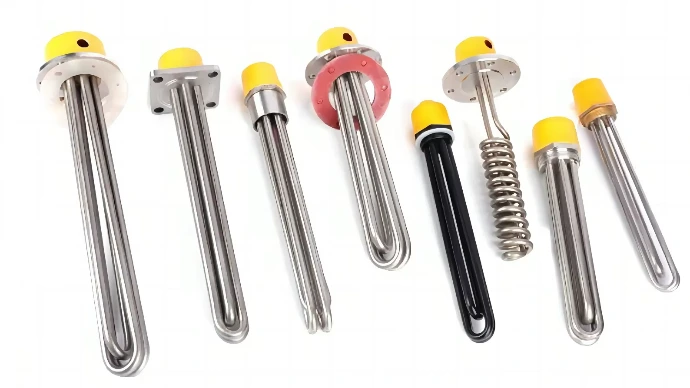
Electrical screw-plug immersion heaters are engineered for efficient heating and precise temperature maintenance of liquids, gases, or fluid mixtures, operating reliably in both static and circulating systems across a wide range of industrial applications.

Contact our engineering team to select and design heating solutions precisely matched to your system requirements.10

Request a quote!
Screw-plug Immersion Heaters 

Design Concept and Application Scope


The design of screw-plug immersion heaters is developed in strict accordance with customer-specific process parameters, including the type and physical properties of the medium to be heated, inlet and outlet temperatures, operating pressure, heat-transfer conditions (static or circulating), and environmental requirements such as hazardous area classification (ATEX or non-ATEX), onshore, or offshore installation.

Screw-plug immersion heaters are available either as fully customized solutions or within a standardized product range. They are commonly used for heating both static and circulating media such as water, rinsing baths, oils, acids, thermal fluids, heavy oils, air, and various gases. Typical installation points include tanks, cisterns, boilers, and circulation heater assemblies.

These heaters are widely applied across multiple industries, including petrochemical, chemical processing, food production, plastics, and related industrial sectors. Reliability, mechanical strength, and long-term operational stability are fundamental design principles, ensuring dependable performance in demanding operating environments.

Key Features

  • Application-Oriented Design — Engineered to heat or maintain the temperature of liquids, gases, or mixtures in static and circulation conditions for industrial processes.
  • Custom Configuration — Tailored to specific process conditions, including fluid type and properties, temperature range, pressure, and heat-transfer requirements.
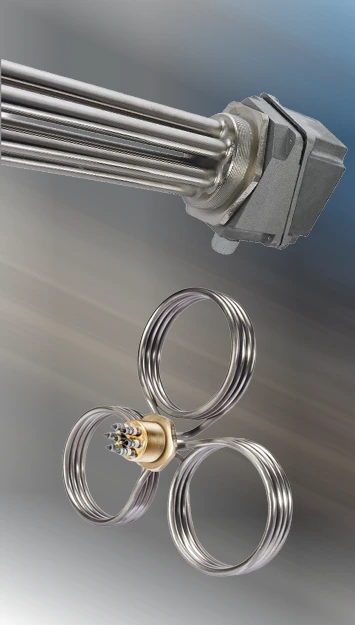
  • Modular Heating Elements — Can include one, three, or six tubular heating elements mounted on screw-in plugs, allowing flexible power and configuration options.
  • Material Selection — Available with plugs and sheaths in brass, steel, or stainless steel to suit different media and corrosion environments.
  • Custom Watt Density — Designed to match required watt density parameters based on fluid characteristics and flow/stagnant conditions.
  • Compatibility With Environmental Conditions — Configurable for ATEX hazardous area compliance or standard industrial environments (ATEX and non-ATEX options).
  • Robust Construction — Engineered for reliability and long service life in demanding industrial applications.
  • Broad Range of Uses — Suitable for heating water, oils, thermal fluids, acids, gases, and other process media across multiple industries.
  • Installation Flexibility — Designed for direct mounting in tanks, cisterns, boilers, or circulation heater systems.
  • Standard or Customized Supply — Available both as standard product versions and fully engineered custom variants to fit unique process requirements.
Product Overview

  • Power range from 100 W up to 40 kW (higher ratings available upon request)

  • Designed for operating pressures up to 15 bar (PED compliant)

  • Screw plug materials available in carbon steel, brass, and stainless steel (AISI 304 / 316 / 316L)

  • Tubular heating elements manufactured from stainless steel, Incoloy®, Inconel®, or other alloys depending on the heated medium

  • Single-phase or three-phase electrical configurations

  • Custom voltage, watt density, and connection options available
Advantages

  • Wide selection of materials, geometries, and electrical options adapted to each customer’s process parameters

  • Standard product range available for fast delivery, alongside fully custom-engineered solutions

  • Process-driven design approach, considering fluid properties, temperature limits, flow conditions, and corrosion risks

  • In-house engineering and manufacturing control, ensuring consistent quality, traceability, and optimized performance

  • Proven expertise in industrial heating applications, supporting long service life and stable operation even in demanding environments

Operating Conditions & Configurations

  • Standard industrial execution (Non-ATEX)

  • Hazardous area execution compliant with ATEX / IECEx and NEC 505 requirements

  • Ambient operating temperatures from –60 °C to +80 °C

  • Process media temperature range from cryogenic conditions (down to –270 °C / 3 K) up to 1000 °C, depending on design

  • Suitable for liquids, gases, and solid-fluid mixtures

  • Installation in onshore and offshore environments

  • Resistant to salt atmosphere and corrosive industrial conditions (with appropriate material selection)

  • Maximum design pressure: 15 bar (brazed construction, PED compliant)

  • Vertical or horizontal mounting positions supported

  • Optional accessories:

    • Integrated thermostats or thermocouples

    • Control panels and safety limiters

    • Special surface treatments or coatings

Media Compatibility

Liquids, gases and solids — indicative max surface loads and recommended sheath materials.

Water
  • Stagnant water Max: 8–12 W/cm² Materials: Copper, AISI 321, AISI 316L
  • Circulating water Max: 10–16 W/cm² Materials: Copper, AISI 316L, Incoloy® 800, Incoloy® 825
  • Boric water Max: 8 W/cm² Materials: AISI 316L
  • Boiler water Max: 8–16 W/cm² Materials: AISI 316L, Incoloy® 800, Incoloy® 825
  • Chlorinated water Max: 6 W/cm² Materials: Incoloy® 825
  • Sea water Max: 3.5–6 W/cm² Materials: Incoloy® 825, Inconel® 600
  • Demineralized / deionized / distilled / softened water Max: 4–6 W/cm² Materials: AISI 316L, Incoloy® 800, Incoloy® 825
  • Domestic hot water Max: 4–8 W/cm² Materials: Copper, AISI 316L, Incoloy® 825
  • Caustic water (2%, 10%, <30%, 70%) Max: 2.3–7 W/cm² Materials: AISI 316L, Incoloy® 825, Inconel® 600
Oil
  • Fuel oil pre-heating (light fuel oil / C fuel oil) Max: 1–2 W/cm² Materials: AISI 321, AISI 316L
  • Heavy fuel (depending on grade) Max: 0.5–3.5 W/cm² Materials: AISI 316L
  • Gasoline / kerosene Max: 3.0–3.5 W/cm² Materials: AISI 316L
  • Machine oil (SAE 10 / 30 / 40 / 50) Max: 2.0–3.5 W/cm² Materials: AISI 316L
  • Mineral oil (according to temperature) Max: 0.5–3.5 W/cm² Materials: AISI 321, AISI 316L
  • Lube oil Max: 2.3 W/cm² Materials: AISI 321, AISI 316L
Acids & corrosive fluids
  • Acetic acid Max: 6 W/cm² Materials: AISI 316L, Incoloy® 825
  • Boric acid Max: 6 W/cm² Materials: Incoloy® 825
  • Chloric / Hydrofluoric / Nitric / Sulphuric acids Max: 1.5 W/cm² Materials: PTFE (Teflon) coating (or equivalent chemical-resistant sheath)
  • Alkaline bath Max: 6 W/cm² Materials: AISI 321 (non-corrosive compounds), AISI 316L
  • Phosphate bath Max: 4 W/cm² Materials: AISI 316L, Incoloy® 825
Glycol
  • Ethylene glycol / Propylene glycol (according to concentration) Max: 4–8 W/cm² Materials: AISI 321, AISI 316L
Other liquids
  • Asphalt / tar / heavy viscous compounds Max: 0.5–1.5 W/cm² Materials: AISI 316L
  • Milk Max: 0.3 W/cm² Materials: AISI 316L
Gas
  • Air (according to sheath temperature) Max: 0.1–8 W/cm² Materials: AISI 321
  • Circulating air (according to sheath temperature) Max: 0.1–8 W/cm² Materials: AISI 309
  • Natural gas (according to sheath temperature) Max: 0.1–8 W/cm² Materials: AISI 321, AISI 316L
  • Argon / Nitrogen (according to sheath temperature) As required Materials: AISI 321, AISI 316L, Incoloy® 825, Inconel® 600
  • Propane / Butane (according to sheath temperature) As required Materials: AISI 321, AISI 316L
  • Oxygen / Hydrogen (according to sheath temperature) As required Materials: AISI 316L
Solids
  • Oxychlorination Max: 3 W/cm² Materials: Incoloy® 800, Incoloy® 825
  • Calcination Max: 3 W/cm² Materials: Incoloy® 800, Incoloy® 825
  • HC regeneration Max: 2 W/cm² Materials: Incoloy® 800, Incoloy® 825

Note: Values shown are indicative guidelines. Final watt density and material selection must be validated against process chemistry, temperature, flow regime, and safety requirements.

Industrial Applications

Caldor’s screw-plug immersion heaters are designed for direct installation in tanks, vessels, and pipelines, providing efficient and controlled heating for a wide variety of industrial processes:

  • Chemical & Petrochemical Processing

    Heating and temperature maintenance of process fluids, corrosive media, rinsing baths, and chemical solutions in both batch and continuous systems.

  • Oil & Gas Industry

    Preheating and temperature control of oils, fuels, gas mixtures, and auxiliary process lines in onshore and offshore installations.

  • Water & Wastewater Treatment

    Heating of process water, boiler feedwater, demineralized water, and treatment tanks in municipal and industrial facilities.

  • Power Generation & Energy Systems

    Heating of thermal fluids, lubrication oils, and auxiliary circuits to support stable and efficient plant operation.

  • Food, Beverage & Pharmaceutical Processes

    Controlled heating of liquids under hygienic conditions, with material selections suitable for regulated and clean-process environments.

  • General & Custom Industrial Systems

    Engineered solutions for specialized applications requiring precise thermal control in static or circulating systems, with customized power ratings and material configurations.

Heating Elements

Caldor Heat Engineering SRL selects watt density, tube diameter, and sheath materials to maximize reliability, thermal stability, and corrosion resistance in your process conditions.

Design approach

The heating element configuration is defined by the application: medium properties, flow regime (static or circulating), target temperatures, allowable sheath temperature, and corrosion exposure. This ensures optimized heat transfer, long service life, and stable electrical performance.

Key parameters

Watt density • tube diameter • sheath alloy • insulation system • terminal sealing • cold zone design

Outcome

Reduced risk of overheating, corrosion-related failures, and insulation degradation—especially in harsh or variable processes.

Technologies
  • Tubular heating elements (most common configuration for immersion heaters)
  • Heating rods installed in sleeves (service-friendly design for specific assemblies and maintenance strategies)
Tube diameter & sheath material options

Tube diameters Standard

  • Ø 6.5 mm
  • Ø 8.5 mm
  • Ø 10 mm
  • Ø 13.5 mm
  • Ø 16 mm

Tube / sheath materials

Stainless steels

AISI 321 (1.4541)
AISI 316L (1.4404)
AISI 309 (1.4828)

High-performance alloys

Incoloy® 800 (1.4876)
Incoloy® 825 (2.4858)
Inconel® 600 (2.4816)

Special materials

Titanium (for specific corrosive environments, case-by-case validation)

Coatings

PTFE (Teflon™) coating
Halar® coating

Tube type

  • Sealed tube Standard
  • Seamless tube On request

Note: Final selection depends on chemical compatibility, sheath temperature limits, and required watt density.

Manufacturing & build quality
  • European-grade components selected from qualified suppliers (traceable supply chain)
  • Manufacturing and assembly in Romania by Caldor Heat Engineering SRL

Why it matters

Consistent materials, controlled processes, and standardized quality checks deliver repeatable performance across production batches.

Customization

Geometry, cold zones, electrical terminations, and sealing systems are adapted to your mounting, environment, and service requirements.

Internal construction (typical heating element)
  • Connection terminals — engineered for reliable electrical contact and serviceability
  • Tube (sheath) — selected alloy/coating based on corrosion and temperature exposure
  • Insulation (MgO – magnesium oxide) — optimized heat transfer and electrical insulation
  • Resistance wire (NiCr 80/20) — Joule-effect heating conductor, designed for stable output
  • Cold length / cold zone — reduces heat exposure at terminals and improves sealing life
  • Sealing system — prevents moisture ingress; materials include silicone, resins, or cement depending on environment and temperature
  • Output insulation (steatite or corundum) — dielectric insulation ensuring creepage/clearance distances and long-term electrical safety

Note: Construction details may vary depending on ATEX requirements, terminal enclosure type, temperature class, and maintenance philosophy.

Terminals

Terminal configurations are selected to ensure secure electrical connections, mechanical strength, and long-term reliability under thermal and environmental stress.

Standard terminal configurations
  • Threaded rod – carbon steel or stainless steel
    M4 × 0.7 → tube Ø 6.5 mm / Ø 8.5 mm / Ø 10 mm
    M5 × 0.8 → tube Ø 13.5 mm
    M6 × 1.0 → tube Ø 16 mm
Optional terminal executions
  • Plain rod terminals
  • Flat terminals
  • Tab-type terminals
  • Factory-fitted connection cables

Optional terminal types are selected according to electrical load, connection method, enclosure type, and installation environment.

Screw / Plug

Screw-plug connections are designed to ensure mechanical strength, leak-tight sealing, and long-term reliability under thermal and pressure loads.

Standard plug dimensions
  • Thread sizes: 1/2″, 3/4″, 1″, 1″1/4, 1″1/2, 2″, 2″1/2
  • Metric threads: M45, M77

Other thread dimensions and standards (BSP, NPT, metric) are available upon request.

Plug materials

Standard materials

  • Brass
  • Carbon steel
  • Stainless steel (AISI 304 / 316 / 316L)

Material selection criteria

Selected according to fluid compatibility, corrosion risk, operating temperature, and mechanical stress.

Connection to heating elements
  • Brazed connection Standard — suitable for most industrial applications
  • Welded connection On request — recommended for higher mechanical loads, aggressive media, or critical processes

The connection method is defined during engineering to ensure pressure resistance, leak-tightness, and compliance with applicable standards.

Sealing & optional accessories
  • Seals adapted to plug thread and operating temperature
  • Sealing nuts matched to plug geometry
  • Flat gaskets, O-rings, or custom sealing solutions

Sealing materials are selected based on pressure, temperature, chemical compatibility, and installation environment.

Connection Box

Connection boxes are selected according to installation environment, safety classification, and operating temperature to ensure electrical protection and long-term reliability.

Non-ATEX connection box

Execution

  • Standard industrial connecting box
  • Suitable for non-hazardous areas

Available materials

  • Industrial plastic
  • Painted carbon steel
  • Stainless steel
  • Aluminium
ATEX / IECEx connection box

Explosion-proof execution

  • Certified Ex d IIC enclosure
  • Designed for hazardous areas
  • Robust aluminium housing

Cable entry

  • Nickel-plated brass cable gland Standard
  • Stainless steel cable gland Optional

ATEX / IECEx execution is engineered in compliance with applicable explosion-protection standards and temperature class requirements.

Temperature limits & installation recommendations
  • Fluid temperature ≤ 110 °C → Direct mounting of the connection box (no offset required)
  • Fluid temperature > 110 °C → Offset between the connection box and the tank is recommended to reduce thermal stress

Offset solutions improve component lifetime by limiting heat transfer to terminals, insulation systems, and electrical accessories.

Temperature Control & Switching Devices

Sensor and switching configurations can be integrated to support both process control and safety protection, depending on the application and installation environment.

Available sensor types
  • Thermostat — standard temperature control
  • Safety limiter — over-temperature protection
  • Thermocouple — fast response temperature measurement
  • PT100 (RTD) — high accuracy and stability for process monitoring
Sensor positioning options

In the medium (process control)

  • Direct measurement of fluid temperature
  • Optimized for precise process regulation

On the heating element (safety control)

  • Monitors sheath temperature
  • Reduces risk of overheating in low-flow or dry-out conditions

The selection depends on flow regime, required control accuracy, and safety requirements (e.g., ATEX temperature class).

Integration points
  • On the flange / screw-plug assembly
  • Inside the connection box
  • In an external protective well (if required)

Switching devices and sensor wiring can be configured to match the customer’s control cabinet standards, instrumentation, and site installation constraints.

Electrical Characteristics

Electrical configurations are engineered to match site power supply, control philosophy, and safety requirements while ensuring stable and efficient operation.

Voltage options
  • AC voltage (VAC) — standard industrial power supplies
  • DC voltage (VDC) — specific applications and control systems

Voltage levels are selected according to local standards, power availability, and heater power rating.

Cabling & phase configuration

Single-phase

  • 1PH + N
  • Typical for low to medium power heaters

Three-phase

  • 3PH (with or without neutral)
  • Recommended for higher power ratings and load balancing

Internal wiring and terminal sizing are designed according to current load, insulation class, and applicable electrical standards.

Power range
  • From a few watts for precise temperature maintenance
  • Up to several megawatts for large-scale industrial heating systems

Final power configuration is defined based on required heating capacity, allowable watt density, control strategy, and installation constraints.

Documentation

Caldor Heat Engineering SRL supplies comprehensive technical documentation to ensure traceability, regulatory compliance, and safe installation and operation.

Standard documentation (included)
  • Certificate of conformity to the purchase order
  • Heater electrical wiring diagram
  • Installation, operation, and maintenance instruction manual
On-request documentation

Regulatory & compliance documents

  • Documentation supplied in accordance with applicable directives, standards, and construction codes
  • PED (Pressure Equipment Directive) documentation
  • Material certificates 3.1 according to NF EN 10204

Manufacturing & quality records

  • Welder qualification certificates (QS)
  • Welding procedure qualification records (QMOS / WPS)

The scope of documentation is defined during the quotation and engineering phase to match project requirements, applicable regulations, and customer specifications.

Manufacturing Tests

All Caldor heating elements are subjected to systematic quality controls to ensure electrical safety, mechanical integrity, and dimensional conformity before shipment.

Electrical tests
  • Power test (cold resistance measurement)
    Allowed tolerance: -5% / +10% of nominal resistance value
  • Insulation resistance test
    Direct voltage: 500 V — minimum cold value: > 100 MΩ
  • Dielectric strength test
    Test voltage: (2U + 1000 V) × 1.2 applied for 1 second
  • Stray current & hot dielectric rigidity
    Measured on representative samples at operating temperature On request
  • Final electrical control
    100% of heating elements tested prior to shipment
Mechanical tests
  • Visual inspection of welds, assemblies, and overall workmanship
  • X-ray examination of welds If required
  • Liquid penetrant test (PT) for surface defect detection
  • Pressure control / leak test (where applicable)
Dimensional tests
  • Verification of critical dimensions affecting installation and performance
Other tests & operations
  • Helium leak test On request
  • Degreasing prior to delivery
  • Argon cleaning for specific applications and cleanliness requirements
Third-party inspection
  • Independent third-party inspection and witnessing On request

Test scope, acceptance criteria, and inspection levels are defined during the quotation and engineering phase in accordance with applicable standards and customer specifications.

Screw-Plug Immersion Heater 
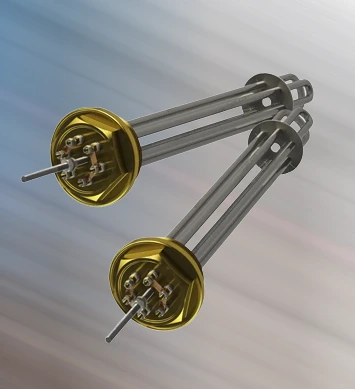
A screw-plug immersion heater is an industrial electric heating solution designed for the direct heating and temperature maintenance of liquids, gases, or process media in tanks, vessels, boilers, and pipelines. The heater is composed of one or more tubular heating elements mounted on a threaded screw plug, allowing fast, secure, and leak-tight installation directly into the process equipment without the need for complex flanges or supports. Heat is generated by electrical resistance and transferred efficiently to the medium through direct immersion, ensuring stable and uniform temperature control.

Screw-plug immersion heaters are widely used in numerous industrial sectors, including chemical and petrochemical processing, oil and gas applications, water and wastewater treatment, power generation systems, plastics processing, and food, beverage, and pharmaceutical industries. They are particularly valued for applications where compact design, easy installation, and reliable performance are essential, both in static and circulating systems.

Engineered for demanding industrial environments, screw-plug immersion heaters are capable of operating at elevated temperatures and pressures while maintaining long-term reliability. Their robust construction, combined with carefully selected sheath materials and threaded plug standards, provides excellent resistance to corrosion, thermal stress, and mechanical loads. Depending on the application, they can be equipped with integrated temperature sensors, thermostats, safety limiters, or external control systems to ensure safe and precise operation.

One of the key advantages of screw-plug immersion heaters is their high level of design flexibility. Power rating, watt density, element geometry, materials, thread size, and certification level (Non-ATEX, ATEX, IECEx, NEC) can be fully customized to match specific process conditions. With efficient heat transfer, compact footprint, long service life, and straightforward installation and maintenance, screw-plug immersion heaters represent a reliable, cost-effective, and SEO-relevant heating solution for modern industrial processes.

Technical & Commercial Inquiries for Custom-Engineered Screw-Plug Immersion Heaters

Contact our engineering team to submit your technical specifications and request detailed quotations for customer-focused, application-specific Screw-Plug immersion heater solutions.